Overview
- Introduction: Moving education from stable, broadcast models into responsive, dynamic systems.
- Goal: Redesign learning experiences using AI environments rather than chasing isolated tools.
- Audience: Presenters, educators, and learning designers.
- Contents: The Tension • Technology Limits • The Reframing • Environment Architecture • Demonstrations
1. We Are Between Two Worlds
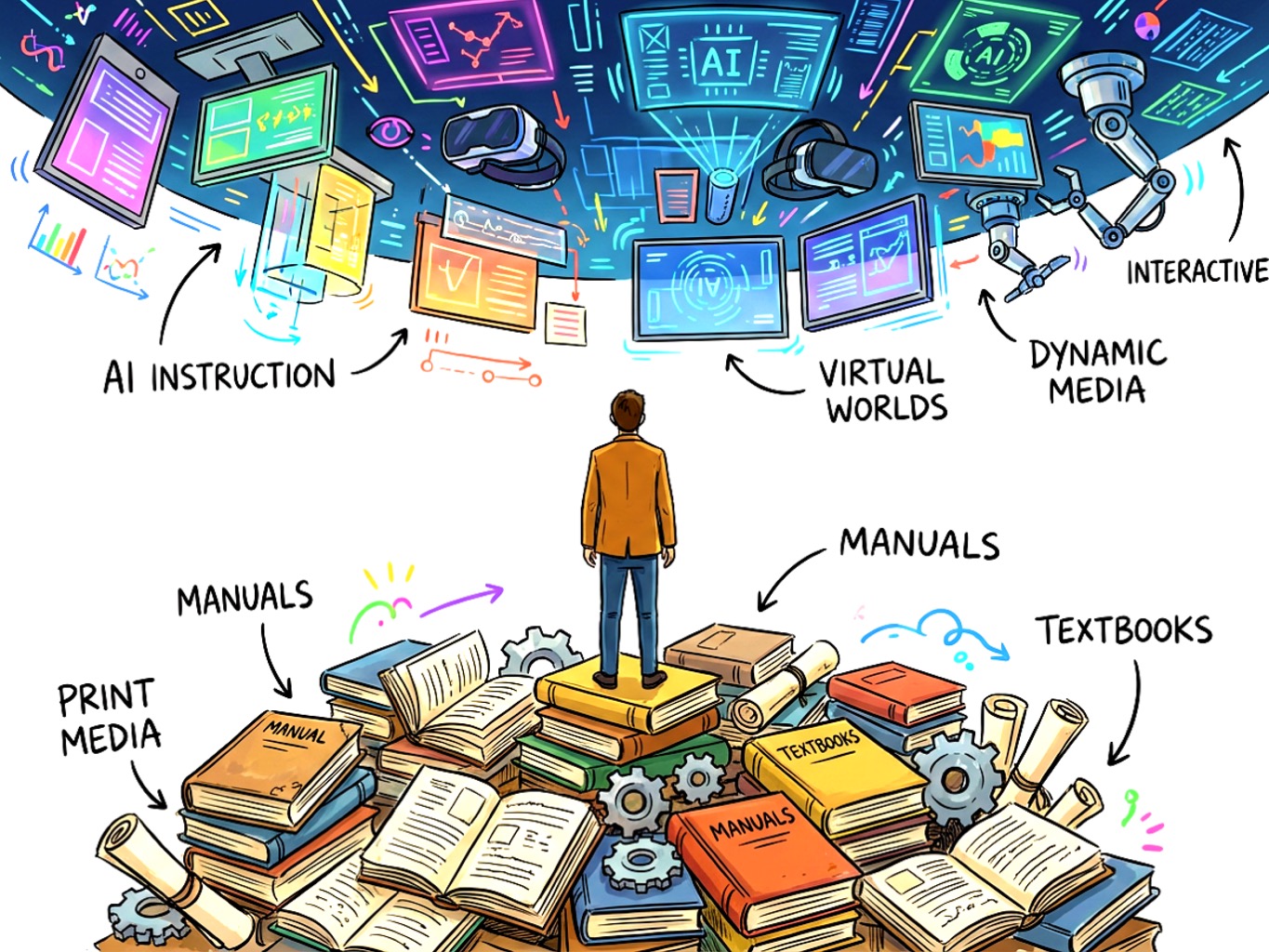
Education is currently pulled between two models of teaching. One world is built around stable media, predictable structures, fixed representations, and teaching to the middle. The other is emerging through AI, virtual worlds, and dynamic systems that allow multiple representations and more responsive learning.
Why Change Feels So Difficult: This system did not form overnight. It was shaped by centuries of print-based pedagogy, followed by only a few decades of flexible digital media, and only a few years of AI-driven systems. That time mismatch creates a powerful barrier. Teachers are continuously asked to learn new tools, adapt for diverse learners, and align to standards while the target keeps moving.
2. Why More Technology Has Not Been Enough
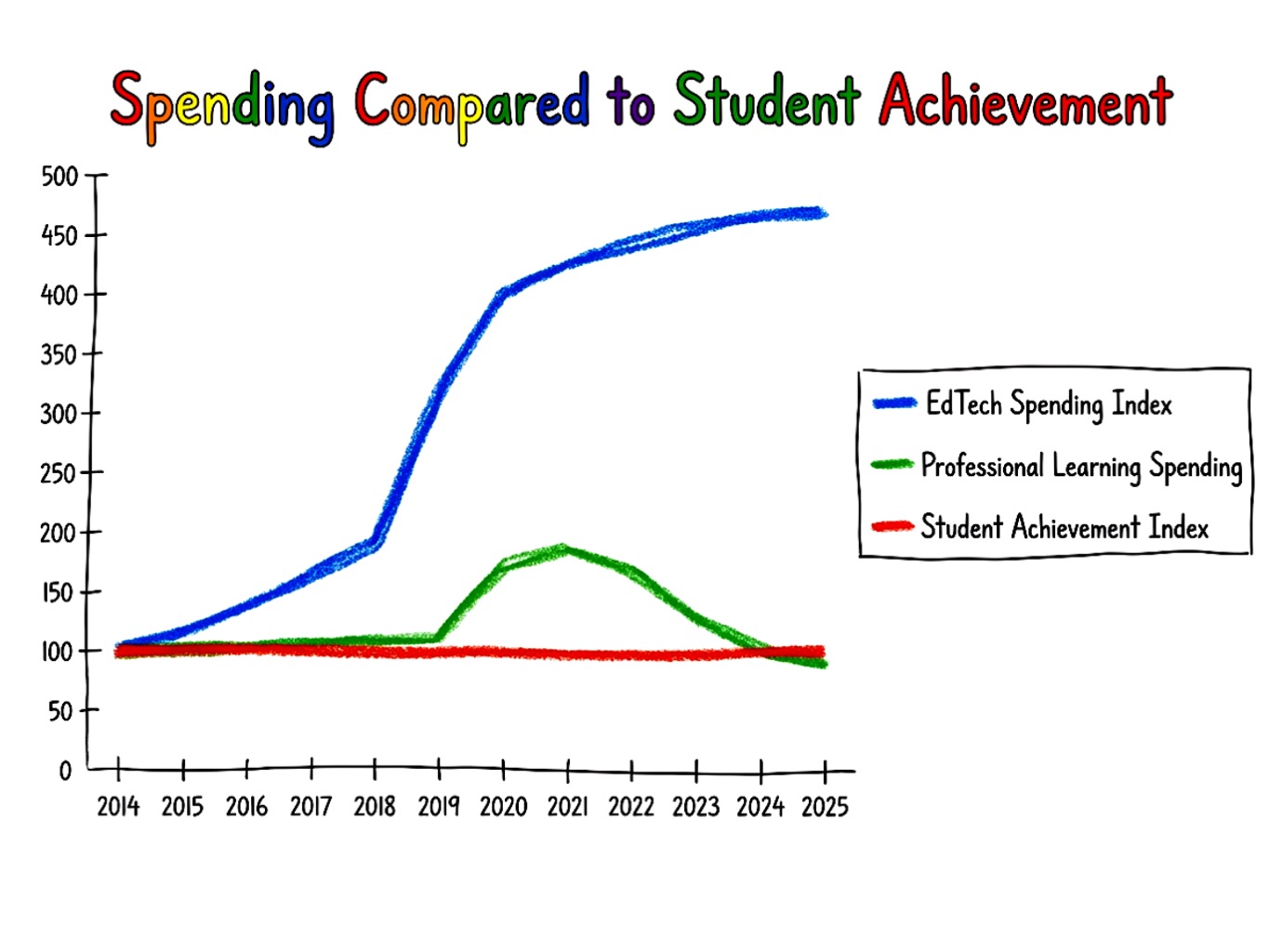
While technology spending and professional learning have increased, student achievement has remained mostly flat. This represents a system design problem, not simply a lack of access or training.
New tools keep getting added, but they continue to orbit the old structures because the underlying environment has not changed.
What the chart suggests: investment and effort have continued to rise, but the learning results have not moved in proportion. The impact is not that technology has no value, but that adding more devices, platforms, and training into the same instructional model does not produce transformational change on its own.
3. From AI as a Tool to AI as an Environment
The goal is not simply to help teachers keep up with continuous change, but to design educational environments that absorb more of that change for them.
| Stage | Description |
|---|---|
| Level 1: AI as a Tool | Relying on prompting, direct interaction, and isolated outputs. |
| Level 2: AI as a Collaborator | Utilizing multiple agents working together in a workflow. |
| Level 3: AI as an Environment | AI operating inside a designed system grounded in curriculum, student needs, pedagogy, and context. |
4. Designing Intelligence Environments
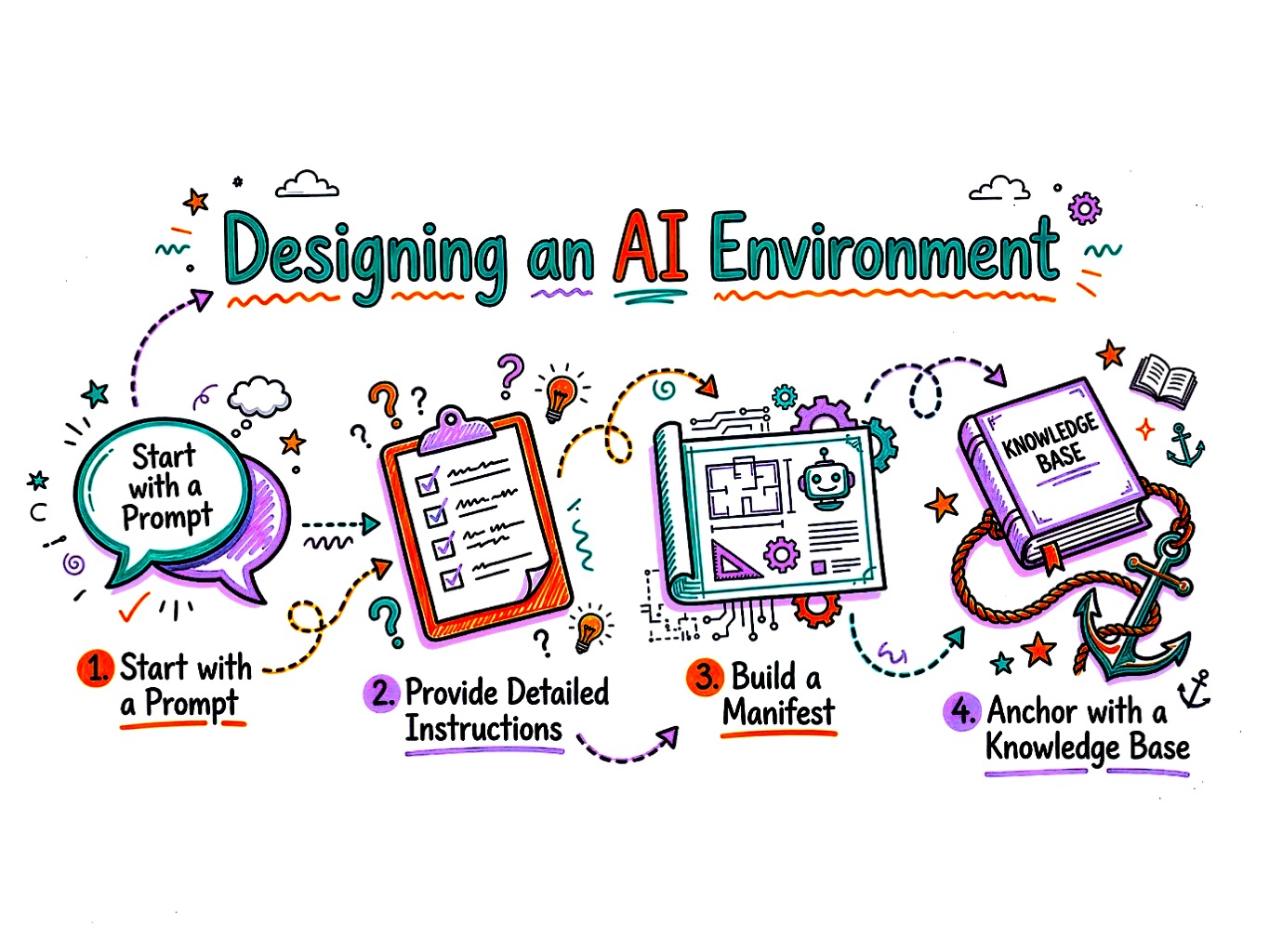
An intelligence environment is designed for thinking, support, and instructional coherence. The AI no longer guesses from a single prompt; it works within a structured space. Here is the architecture of such an environment:
| Component | Function |
|---|---|
| Entry Point | Provides a clear, accessible way for learners to begin. |
| Front-facing Guide | Offers instructions and sets expectations for interaction. |
| Manifest | Declares the environment's rules, purpose, and AI behavior. |
| Source of Truth | Anchors responses in specific, reliable curriculum documents. |
| Context | Integrates pedagogy, support structures, and learner needs. |
5. Demonstrations and Applications
Explore what these ideas look like in action across our site:
- Prompt Handouts: Dedicated guides for teachers and students.
- Study Buddy Demo: An interactive AI learning environment.
- Virtual World Designer: Experience a specialized agent implementation.